
Nature's edibles
Updated: May 12
The first Saturday in May was a beautiful day for foraging and Marion County naturalist Karen Johlas-Szalkowski led an enthusiastic group through Big Rock Park in search of nature’s edibles.
She began with a list of safety rules.
1. Tell someone where you are going.
2. Get permission if you want to forage on private property. Be sure to check park
rules and regulations before harvesting in public areas.
3. Forage sustainably by not overharvesting and take only what you will use in
areas where there is healthy population of the plant.
4. Make sure the area has not been sprayed with any type of chemicals, frequented
by dogs, or over compacted trails.
5. Be 100% sure of what you pick. She highlighted that you should be careful of
information you find online. Not all sources have been well researched. Look for
websites that end in .edu or .gov, come from universities, or reputable nature &
conservation organizations. Samuel Thayer and Mike Krebill have great
reference books.
It goes without saying that you shouldn't pick rare or endangered plants. Quite often these are not worth the effort. They provide very little food. There are plenty of plentiful plants to enjoy.
Violets are sweet and they make lovely cake toppings. To recognize the violet, look for three petals on top and two on the bottom. The white and purple are the best tasting.

The blue woodland phlox will provide one drop of sweetness. It has five petals and is purple. The children in the group thought phlox tasted like ice cream.


Clover with white or pink flowers is a delightful addition to cookies.
This jaggedly plant with white flower is an anise plant and it tastes like licorice. You can put it in baked goods if you like the taste of black licorice.

Spring beauty is a tiny flower important to pollinators. Its lines act like a little runway showing the pollinators where to go and it's one of those that's too small to be worth any effort just to enjoy their beauty.
Roses you can eat the hips after the flower blooms, but use care, or better yet, use them for tea. Use the petals to make your own rose water. The multifloral rose is invasive and can be used as an ingredient.
You'll find gooseberry out in the wild. It needs a lot of sugar to be used in a pie or a jam.
Dog tooth violets are trout lilies. These have not been studied very well so you will find them at Big Rock Park. Ants seemed to love to spread their seeds, but eating is not recommended.
Plantains are thought to be good for digestion and tasty when the leaves are small. The shoots are okay, too. You can chew up a plantain and make a paste to relieve the itch of an insect bite. Try to avoid those that are bug chewed and dirty.
The big kahuna of edibles at Big Rock Park so to speak, is the invasive garlic mustard. Garlic mustard crowds sunlight from spring flowers.
Feel free to go to Big Rock Park and if you can easily identify it, just pull it. It's edible--the stems, the leaves, the roots, the flowers, the seeds. You can eat them all! They taste like garlic. One thing to note is that you should probably blanch them, especially if the plant is large. Briefly drop it in some hot water and that will keep it more tender.
Look for leaves that don't have any holes. You can even use this as a substitute for garlic.
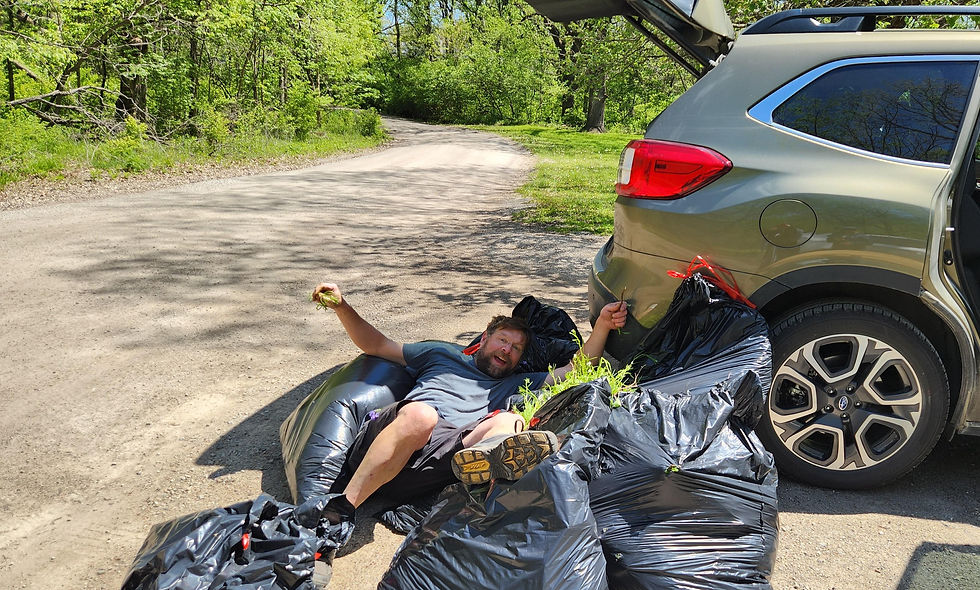
As part of our foraging foray, we went on a huge garlic mustard pulling spree. As you can see we got a lot of garbage bags of garlic mustard.
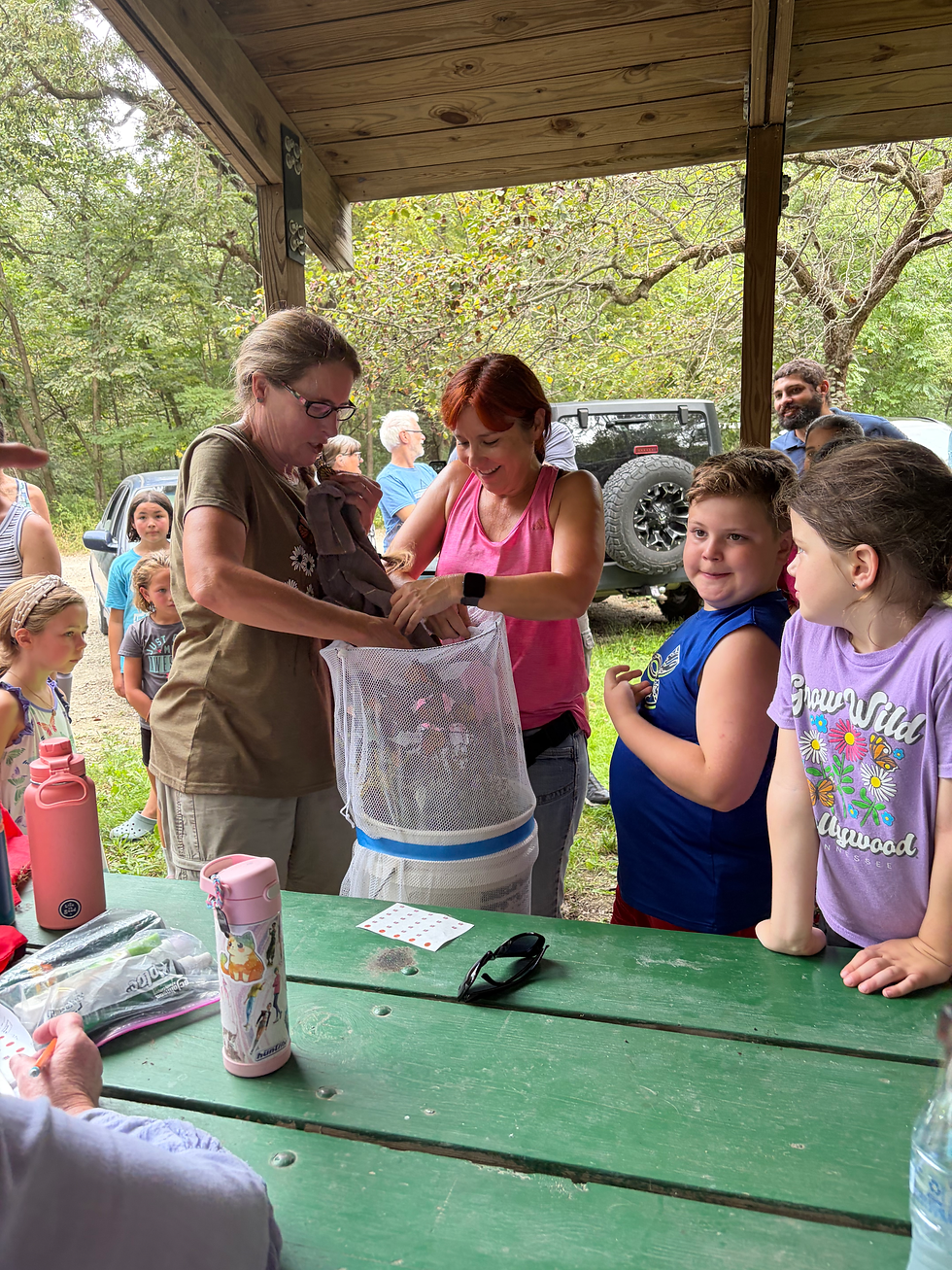
As a reward for our effort, we enjoyed some of the treats made from things that Karen had foraged.

garlic mustard pesto.

Violet jelly

Rose hip tea

.
A recipe

A tasty time was had by all!
Thank you to the Pella Community Fouddation for the funding for this delightful program.


Comments